Friday, October 27, 2023

Punta Loyola, 9/21/23

I missed the Beagle Channel tour while I was in Ushuaia so I didn't see one of my most wanted birds, the Snowy Sheathbill, along with penguins and giant petrels.  Punta Loyola near the mouth of the Rio Gallegos on the south Atlantic might give me another opportunity at these species.  I found my way over to this lonely port which has served as a site for unloading coal for over a century and started looking for Magellanic Plovers which had been reported in the area.  The mudflats below held shorebirds and gave me hope.


But stepping out of the car I was immediately distracted by an unknown passerine in the company of  a common Rufous-collared Sparrow.  I fired a few shots and after returning home I discovered it was my lifer Gray-hooded Sierra-Finch.


I trudged along the edge of the flats and got a little closer but without a scope it was difficult.  I made out peeps which down here would be Baird's Sandpiper.  If I was younger and braver I might have tried crossing the flats but I decided against it.  I also saw what I thought were Two-banded Plovers but they were too distant to call.


Back in the car I drove past the dock and around the point.


A passerine flushed into a bush.  It was another Scale-throated Earthcreeper.


I made my way down to the sea shore which consisted of pebbles rather than sand.  In the distance I could see Kelp Gulls and a flock of oystercatchers.


I was able to get pretty close to the oystercatchers which were mostly the black backed Magellanic Oystercatchers.  But there were also a few brown backed birds with a white arc at the base of the wing.  These were the more familiar American Oystercatchers.  I think the ragged border between the black breast and white belly indicated juvenile birds.


While photographing the oystercatchers I noticed some white dove shaped birds about the size of a small chicken feeding along the shoreline with the Kelp Gulls.  They kept coming closer to me and I could not believe my luck.  I had found Snowy Sheathbills.  They are a member of the shorebird order and the only nesting bird on Antarctica without webbed feet.  They nest in penguin colonies where they eat about anything including eggs and young penguins.  They winter on south Atlantic islands and the south coast of Argentina.  They also do a lot of scavaging which might explain the bare skin around the face.  These rather unattactive birds seemed to be feeding on seaweed and came quite close.


Well that was cool.  Next up for the morning was the Marjory Glen.  While studying Youtube videos of Rio Gallegos I came across this wrecked ship which is just down the coast from Punta Loyola.  The Marjory Glen was a three masted metal hulled sailing ship buit in Scotland in 1892.  A Norwegian company bought the ship in 1911 and she caught fire hauling coal just off the coast near Rio Gallegos.  The ship was condemed and towed to Punta Loyola in 1915.  Apparently the Argentinian Airforce used it for target parctise in 1982 as they prepared to fight the Bristish over the Islas Malvinas (Falklands). 


The only seabirds passing by were flocks of Imperial Cormorants.


Now it was time for the long drive back to El Calafate where I had reserved another Air B&B.  Once again I flushed shorebirds as I drove on Ruta 40 and once again I back tracked.  This time it was a couple of Tawny-throated Dotterals.  What a magnificent shorebird!


As I drove across the snowy plateau one more time I noticed tracks in the snow the seemed to go from one large rock to the next.  Then I dound who was leaving the foot prints.  This is a South American Gray Fox.  It's in a completely different genus than our Gray Fox in North America.


Back in El Clafate my new Air B&B overlooked the mudflats of Lago Argentina.  It was a pretty specacular view.


I was able to pick up my lifer Two-banded Plover but not much of a photo.


Tomorrow more fun at Reserva Laguna Nimez.


A drive across Patagonia, 9/20/23

From a birding standpoint I should have spent more time working around El Calafate, but I wanted to see more of Patagonia so I checked out of the Air B&B, loaded up the car and headed towards Rio Gallegos.  There were plenty of guanacos along the highway as I passed the turnoff to the El Calafate airport and continued eastward on the famous AR 40.  Argentinians are very proud of Ruta Argentina 40 which starts in the south at Punta Loyola near Rio Gallegos and goes north all the way to La Quiaca on the Bolivian border, a distance of  3227 miles across this huge country.  If I remember correctly guanacos were the source of domesticated llamas and vicuna are the ancestors of alpacas.  These camelids are well adapted to the dry patagonian steppe.


Another citizen of this arid scrubby grassland is the Lesser Rhea.  I saw quite a few but I didn't get any great photos.  These flightless ratites are much smaller than the Great Rhea which is commonly kept in zoos and native to the more lush northern grasslands.


Ruta 40 snaked it's way up the side of a plateau and suddenly I emerged onto a vast, snowy plain.  I had seen this region from the plane a few days earlier but had no idea I would be driving through it.


As I drove through this icy wonderland I was shocked to see a small flock of shorebirds fly by.  What the...?  I doubled back and luckily found a couple.  Yes they were shorebirds but not what you typically think of.  These were Least Seedsnipes, one of the four herbivorous seedsnipe species of specialized shorebirds that occur though much of the Andes.


Descending from the plateau I found more Lesser Rheas,


I pulled off the highway for a lunch break and was fortunate to catch some critter scurrying though the grass.  An armadillo?  Yes it was the Patagonian Armadillo which apparently is the only member of this edentate family with the ability to store fat and hibernate through the winter.  All other armadillo species occur though the neotropics and subtropics where they feed on insects year around.  I guess this one had not long ago emerged for the spring.


After 180 plus miles I reached Rio Gallegos in the afternoon.  (Spanish usually pronounces a "ll" as a "y".  But in Argentina it is pronounced as a "sh" so they say Rio Gahshaygos.  Spanish is a little different down there and at times I had a difficult time understanding with my poor Mexican spanish.)  Anyway Rio Gallegos proved to be a dull, gray windy but friendly port town and much larger than I had anticipated with a population of over 100,000.  With the help of Google Maps I found my way down to the waterfront and was soon glassing over the windy bay.  Hooded Grebes have been found here in winter.  Though my binocs I picked out what looked like several pale bodies with dark heads.  Hooded Grebes?  I fired a few shots and zoomed in on the back of the camera.  No they were just very distant Imperial Cormorants.  Ugh!

Another was much closer on this structure with Neotropic Cormorants.


A flock of Browned-hooded Gulls cruised by.

Well it was cold and windy so I made my way to my Air B&B which was a bit more grim than I had expected.  But it was in a good part of town and I was just a few blocks from restaurants.  Problem was the nice ones had closed for the afternoon and would not reopen till 7PM which seemed to common down here.  Eventually I found a food mall and got a mediocre hamburger.  You would think in this land of cattle ranches that they would make good hamburgers but that was not my experience in the few that I consumed.

Perito Moreno Glacier, El Calafate 9/19/23

Today's goal was to see the Perito Moreno Glacier and maybe find a few birds.  The sunny, arid Patagonian grasslands were such a contrast to the dark, wet, forested Tierra del Fuego and made for a beautiful fifty mile drive to the glacier.  Here's Lago Argentina with the southern Andes behind.


A couple of very large birds soared over the ridge to my left and I had a good guess they were going to be Andean Condors.  I had seen a few many years ago in Peru at Colca Canyon but it was nice to finally get some photos.  I love the shadows agains the mountain.


I made a few stops at marshy areas along the way but saw just the same stuff I had seen the day before at Laguna Nimez.  After a while the highway followed along a forested mountain on the right and a fiord on the left which was an extension of Lago Argentina.  Those big floating chunks of ice were looking a little suspicious.  Where did they come from?


A shot of my only Clilean Flicker was a bit fuzzy with the running engine of the car.


Entering Parque Nacional Los Glasciares.


I paid the rather stiff entry fee of 10,000 pesos and entered the park.  There were lots of visiting tourists considering the time of year, including a few Americans.  Most were Argentinians.  The tails consisted of raised aluminum walkways that mazed about the mountainside facing the Perrito Moreno glacier.


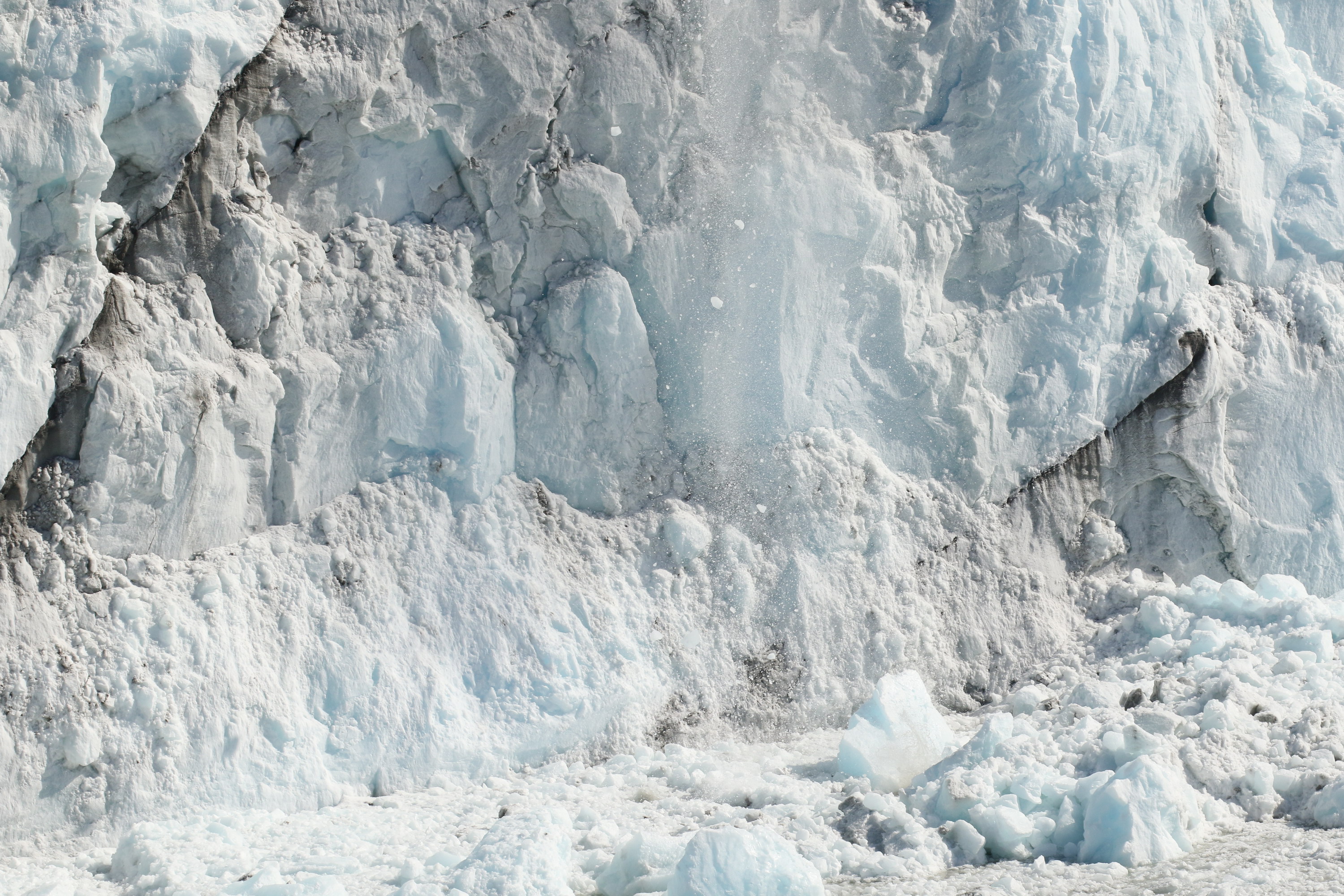
What can I say?  The Perrito Moreno glacier is one of the most impressive natural spectacles I have ever seen.  As most glaciers around the world are facing a losing battle to the warming environment, this one is said to be doing a little better but I'm not sure how true that is.  The glacier towers about two hundred feet above the water's surface.  The good sized tour boat in the lower right is dwarfed by the massive glacier.


What impressed me most was that this glacier is not a static visual sight but actually a dynamic moaning, groaning, cracking river of ice inching it's way from mountians above.  Every few minutes small to huge chunks of ice would explode of the glacier's face and tumble into the frigid waters.  I was not patient enough to capture this event with video.  Probably close to a dozen blocks tumbered inot the water during the two hours I was present.  But many more could be heard with a loud crack and splash as they fell unseen in the interior of the ice flow.


A Patagonian Sierra-Finch begged for handouts.


The maze of trails is expansive enough that it is possible to enjoy a few minutes of solitude.  I found an opportunity to whistle some Austral Pygmy Owl calls hoping for the owl itself.  Instead I got more sierra-finches and this cooperative Thorn-tailed Rayadito.  A family of tourists wandered over and were happy to see the birds.


An immature Andean Condor circled overhead.  I pointed it out to another tourist but he seemed uninterested.


Having my fill of Perrito Moreno, I headed back towards El Calafate birding along the way.  Finally I found a Red-eyed Diucon.  I was hoping for one of these south Andean flycatchers but they are tough to find in winter.


A stop at the closed park picnic area turned up a flock of Austral Thrushes acting like American Robins.


The Southern Crested Caracara seems to occupy the ecological niche filled by Common Ravens in the Northern Hemisphere.  Some authorities treat it as a full species but not the AOS and eBird.


Lots of traffic on the return to El Calafate including many tour buses.  The shallow bay of Lago Argentina that fronts El Calafate was filled with birds including many Chilean Flamingos and Black-necked Swans.


I drove along the west shore not seeing much different but this Gray-bellied Shrike-Tyrant was a nice surprise.


Back in town I stopped at the Wanaco Bar for a nice helping of the local sheep stew and a cold Patagonian.


I don't see as many species as the participants on the expensive bird tours but I have the freedon to play tourist and bird when I like.  And there's a lot more adventure when you're not led around by the nose.

Last day at Costanera Sur 9/24/23

I would have liked another day at beautiful El Calafate but as my departing flight from Buenos Aires to the US was approaching and as that...